The Beginner’s Guide to the Gym
Whether you have a personal resolution to get fit in the new year or have just decided to take your first steps towards bettering your health, you need a good roadmap. Pursuing a better bill of health means navigating all of the intricacies of the fitness world.
The questions circulating your mind might feel infinite — what kind of workout or gym is best suited for your needs? What new gear do you have to buy? What’s the deal with proper nutrition? Fortunately, the answers you seek are all right here.
From specific training plans, diets, and various assortments of equipment, this guide will have you covered. Here is everything you should understand before you join a gym and start grinding toward a healthier life.
How to Start Training
There’s a distinct difference between starting a workout routine without a concrete plan and starting a workout routine with specificity while being mindful of every detail. You can begin at random, but if you don’t know what it is you want to improve upon, you’re not going to make much progress over time.
Step 1 — Pick a Goal
If this is your first workout program, or you don’t have much experience, you’ll see the most benefits from an outlined plan. Rest assured — this is applicable for any gymgoer regardless of their knowledge. Knowing what you want to tackle is one of the first major steps.
Do you want to improve your conditioning? Are you trying to build healthier muscle or see an uptick in your general strength across the board? Maybe you’re looking to change your body composition and lose fat from top to bottom.
The best workout routine for you is sustainable and targets your specific goals.
Step 2 — Choose a Workout Split
Now that you have your goals in mind, center on a workout split, which is how you split up all the work you do over a period of time — usually a week.
There has to be a balance that leaves you with energy for a workout every day and gives you appropriate time to recover. This is where you determine how frequent your training sessions will be. Between three to five days is the most standard split option. If you choose to work out more often, then you may have to reduce your workout frequency. On the flip, if you work out once or twice a week, then those sessions may be more intense.
Step 3 — Select Your Exercises
With your goals and split established, it’s time to pick specific exercises. Every exercise you choose should be in service of whatever your goals are and suitable for your body type. There should be no wasted space.
A dedicated powerlifter, for example, will have plenty of deadlifts, back squats, and bench presses present throughout their split. If you want to become more agile or improve your conditioning, you may still hit up the squat rack, but the majority of your training would consist of exercises that specifically improve the qualities you’re after.
Exercises are typically categorized as either compound or isolation, and they have some distinct differences for you to consider.
Compound
Compound exercises involve movement at more than one joint at a time. They also often work multiple muscles simultaneously, making them both effective and efficient. These movements should occupy a large portion of your overall training.
Some lower body compound exercises you can consider including are back squats, front squats, leg presses, regular deadlifts, and trap bar deadlifts. Some upper body compound exercises you can consider including are the bench press, pull-ups, and push presses.
Isolation
Your isolation, or accessory movements, serve as complements to your compound exercises. They tend to focus on one body part and are good for rounding out your body. Some people use accessory movements to focus on a neglected body area. Others treat accessories as every bit as integral as any compound workout.
How you want to view the place accessory movements have in your routine depends on your respective goals and the variety of exercises you include.
Some potential lower-body isolation movements you can consider including are lunges, and their variations, leg extensions and leg curls, calf raises. Some upper-body isolation movements you can consider including are any type of biceps curl, face pulls, and triceps pushdowns.
Step 4 — Organize Your Workouts
Suffice to say: Each of your workouts ought to begin with your compound movements because of the high energy they require. Then, depending on the day’s tasks, you’ll follow up with supportive, tailored accessory movements. As a general rule, begin with those lifts that recruit more muscles and require more attention before shifting to smaller, isolated movements.
Step 5 — Select Sets and Reps
The number of sets and reps you perform in a given exercise largely dictates how it affects your body. If you’re aiming at more strength, lower reps per set with higher weight will yield more gains. Conversely, dropping the weight down and performing more reps overall will help your muscular and cardiovascular endurance.
Compound exercises tend to match well with lower rep ranges, and the inverse is true for isolation movements. It’s easier to pump out 20 reps for a biceps curl than a back squat. (Though, 20-rep back squats are a thing, and they suck, but they do pay off.)
- 1 to 3 Reps — Power
- 3 to 6 Reps — Strength
- 6 to 12 Reps — Hypertrophy
- 12+ Reps — Endurance
It’s worth pointing out that these are not strict divisions, and that your body’s response to certain reps is more of a spectrum. A set of 12 reps can help you grow more muscle, but also provides a degree of endurance training.
Step 6 — Consider Your Rest
As much as you have to rest post-workout, you also have to rest between your sets. Structured resting periods often separate good workout plans from great ones.
The heavier the lift with smaller numbers of reps, and you’ll probably want a breather before you push your body through another set. The lighter the lift with higher numbers of reps, and you’ll probably want to move at an accelerated pace, depending on what your body can handle. Aim for two or more minutes of rest for heavy, low-rep sets, and a minute or less for high-rep work.
How to Progress
Your gym workout program has goals, tailored workouts with balance, and a general skeleton of sets and reps. Now it needs progression. The most common means of workout progression are increasing your reps, weight, or both.
[Read More: The Best Quad Exercises and Quad Workouts for Muscle Gain]
For example, during your first workout, you back squat 135 pounds for three sets of eight reps. When you next circle around to back squats, you do three sets of nine reps at the same weight and so forth. Eventually, after a couple of weeks, if your legs aren’t jelly, you might add five pounds and run through the same cycle. This process can apply to any exercise.
Sample Beginner Program
If your head is spinning, don’t fret. Below you’ll find a very basic, beginner-friendly three-day routine that incorporates the principles of balanced program design. As you gain more experience with exercising and programming, you can build off of this template or devise your own to attack your specific goals more directly.
This routine is suitable for someone who is new to resistance training and who wants to develop a combination of muscle strength and size.
Day 1
- Back Squat: 3 x 5
- Bench Press: 3 x 5
- Lat Pulldown: 2 x 8
- Lunge: 2 x 12
- Plank: 2 x 30 seconds
Day 2
- Barbell Row: 3 x 6
- Dip: 3 x 8
- Overhead Press: 3 x 8
- Back Extension: 2 x 12
Day 3
- Deadlift: 2 x 5
- Front Squat: 3 x 6
- Dumbbell Pullover: 2 x 8
- Triceps Extension: 2 x 12
- Cable Crunch: 2 x 12
Note: One of the most common forms of exercise notation, shown above, is (sets) x (reps).
When it comes to your workout program, know your reasoning for being in the gym. If you can understand and elaborate well upon why you’ve chosen an exercise, timeline, or dedicated split, it’s fair game to implement.
The Basics of Nutrition
Nutrition is the pillar that supports your workout program. You can exercise all you like, but if you’re not feeding your body the proper nutrients pre and post-workout, you’re figuratively leaving gains on the cutting board.
The greatest athletes in the world exercise feverishly and follow diligent nutrition plans, with nary a second thought because they understand how essential it is to give their bodies proper fuel. Making sound nutrition a priority will pay off in spades long-term.
Caloric Intake
Calories are the fuel that enables you to perform activities both in and out of the gym. How much you eat is predicated on your activity level — as a beginner, you’re probably not going to need as many calories as a competitive powerlifter who needs more energy for their high-intensity workouts.
Thankfully, if you have a grasp of your activity level, you can easily calculate what your daily caloric intake should be.
Macronutrients
A significant part of understanding your nutrition is that it has two primary elements: Macros (or macronutrients) and micros (or micronutrients). Macronutrients refer to the nutrients your body needs in larger quantities.
Protein, carbohydrates, and fat are what constitute your macronutrients. You need a healthy balance to get your fitness to the heights you envision. Each macronutrient contains a number of calories (four for both protein and carbohydrate, and nine calories per gram of fat).
A hearty protein intake helps you recover from the metabolic stress of physical training. Carbohydrates are your body’s preferred fuel source and help fill your proverbial engine. Dietary fat controls many essential regulatory and hormonal processes in your body that contribute to your overall wellbeing.
Protein Sources
- Lentils
- Chicken breast
- Low-fat cottage cheese
- Canned tuna
- Egg whites
Carbohydrate Sources
- Brown rice
- Buckwheat
- Millet
- Whole-wheat bread, pasta, or crackers
- Oatmeal
Fat Sources
- Avocado
- Salmon
- Almonds
- Whole milk
- Coconut oil
Micronutrients
Micronutrients get to do the jobs left behind by the macronutrients.
That is, your micros are your vitamins and minerals, and they are every bit as integral to your health as macros, even if they’re less abundant. If you want to maintain your vision while having a robust immune system, among some functions, you must incorporate micronutrients somewhere into your nutrition.
Luckily, most whole foods contain plenty of healthy micronutrients. Eating unprocessed foods, fresh fruits and veggies, and free-range meat or poultry can help you cover your bases. To be extra sure, you can pick up a solid multivitamin.
Hydration
Water is absolutely crucial to bodily function, and most people don’t drink enough of it. From cell wall integrity to nutrient partitioning, proper hydration keeps your body functioning from head to toe (and everywhere in-between).
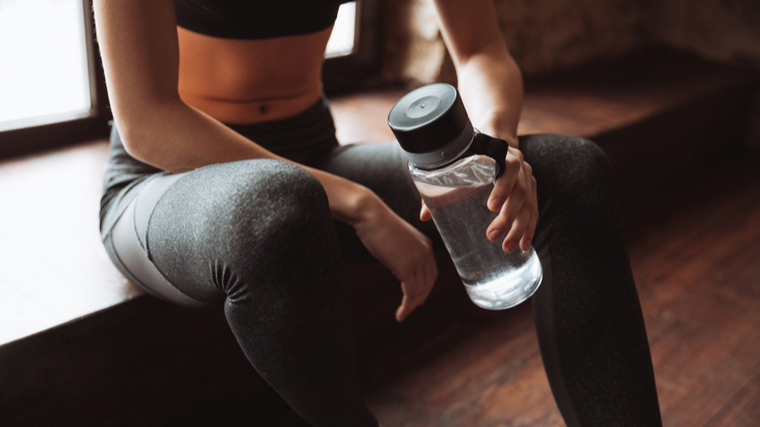
At the gym, you’re likely to need even more water than you might think, especially if you’re training in a way that breaks a real sweat. Try to aim for half a gallon or a gallon of water intake per day, whether you exercise or not.
Gym Gear You Need
The good news is you’ve digested a lot of information to this point and done your research. The “bad” news, which is also good news, is that it’s time to gear up for your workout regimen with proper equipment.
Bear in mind that no piece of gear is essential to making progress on your physique. There are some pieces of equipment that add convenience, comfort, or stability while you’re working out, however.
Gym Bag
Transporting your personal belongings to the gym and back doesn’t have to be clumsy. A solid gym bag can keep you tidy and organized, while also ensuring you have everything you need no matter what kind of training you’re working on.
Lifting Belt
A weight belt helps provide support to your trunk and spine while you lift. As a beginner, it would be wise to work with just your body so you develop solid foundational stability. That said, a good lifting belt can help bring you peace of mind while also adding a bit of extra protection to vulnerable structures.
Cross Trainers
If you’re implementing a hybrid or cross-training program — which balances strength and endurance activities — you can’t neglect your feet. A session with cleans or box jumps and rope climbs will have a lot of intensity that puts your shoes under duress.
Cross-training shoes have become a popular choice in this department as they’re durable, reliable, and suitable for basically every type of training you can do in a gym.
Fitness Tracker
If you’re into meticulous bookkeeping, a fitness tracker is your friend. Not only can a tracker measure your steps, heart rate, or sleep quality, it’ll give you a picture of how active you are during your training, and whether you need to consider any changes. Some “smarter” trackers might link to your phone, letting them send texts, get calls, and even stream music.
Different Types of Gyms
Believe it or not, there are many different types of gyms out there. Some serve the general public, while others address specialty training or niche sports. If you’re searching for a consistent space to work out in, you need to know what kind of gym is appropriate for you.
Commercial Gym
Commercial gyms are Jacks-of-all-trades. Inside a commercial gym, there’s usually a major cardio area with treadmills, ellipticals, and stationary bikes. The other main portion is a strength area with free weights, weight machines, and other instruments. If the gym is massive, sometimes there are additional amenities like a spin studio or basketball court.
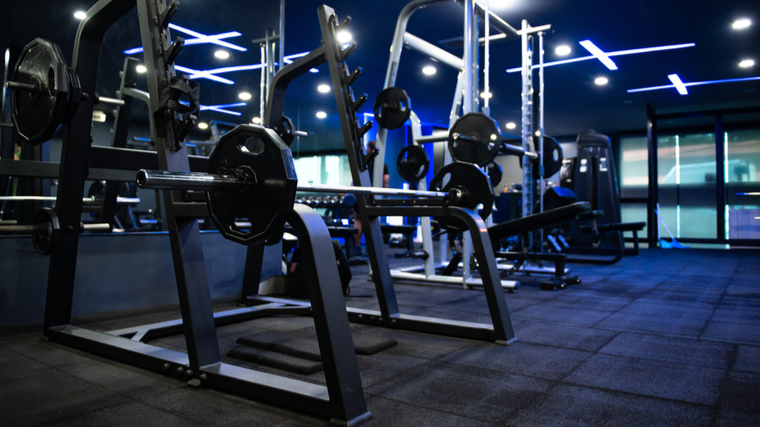
In terms of membership and accessibility, they’re friendlier to your bank account in comparison to specialized spaces and can be found just about anywhere. If you’re testing the waters with exercise, a commercial gym is a fantastic first choice.
CrossFit Box
A run-of-the-mill CrossFit gym centers around the namesake — where you mix strength and conditioning and perform group-based functional fitness classes, with no shortage of applicable equipment like dumbbells, kettlebells, rowing machines, and jump ropes.
A typical CrossFit gym has an open floor. In a group class, members work together through various trials or at their own stations, but the central pillar of a good CrossFit workout is community effort. A certified trainer leads everyone through a session to keep you on track.
Strength Sports Gym
If you’re out to acquire strength, power, and bulk en masse, a strength sport gym is a place to be.
Strength sports gyms focus on athletic development for powerlifting, strongman, or Olympic lifting. These facilities are chock-full of athletes both aspiring and competitive who want to test themselves on the platform or the competition field.
You can find all manner of heavy-duty equipment in a strength gym. Various types of barbells, extra-heavy dumbbells, massive Atlas stones for lifting and tires for flipping. While not as common as commercial gyms or CrossFit boxes — and often more expensive — a good strength gym is second-to-none for getting strong.
Common Gym Equipment
Entering a gym for the first time can be a jarring, but unexpectedly pleasant, experience if you’re committed to bettering yourself. However, you might take one look around and realize that you have no idea what the various contraptions and devices are, or what they do.
From dumbbells and barbells to benches, cable machines, and more, we’ve got your back. Below is a shortlist of the most common equipment you’ll find in a gym.
Dumbbells
A tried and true staple of any modern gym, no gym or workout program is complete without these bad boys. A dumbbell has even weight distributed on each end and is most often used in pairs for a seemingly endless list of exercises for your arms, legs, back, core, you name it.
Dumbbells are often utilized in pairs and allow you to move your arms independently during an exercise, making them fantastic for addressing imbalances or performing unique movements.
Kettlebells
In contrast to a dumbbell’s even weight distribution and one-hand-per-weight design, a kettlebell’s weight is entirely distributed below its handle. One kettlebell easily accommodates the use of both hands, but can also be used unilaterally.
The design of the kettlebell makes it intuitive to move and perform with. They’re great for beginners, who can see noticeable cardio boosts and increases in their work capacity.
Barbells
There’s no need to overcomplicate this description — A barbell is a long metal rod (of varying weight, but often 45 pounds) that holds weight on both ends. There are different kinds of barbells, and they are of frequent use for exercises like squatting and benching.
Barbells allow you to work with the most resistance possible, generally leading to better strength gains if you program properly.
Weight Plates
No barbell goes anywhere without a weight plate tagging along. Standard weight plates are loaded onto the ends of a barbell and come in increments of 2.5, 5, 10, 25, 35, and 45 pounds. They can also be rubber-coated, called bumper plates, such that you can drop your barbell if needed to avoid damaging the gym floor.
Bench
You’re not going to be sitting at this kind of bench, throwing seeds to attract birds. A gym bench is a piece of equipment where you can either lay down (to bench or dumbbell chest press, for example) or sit down (to seated shoulder press, for one).
Squat Rack
Any gym-goer understands that a squat rack is one of a gym’s key elements. It’s where you’ll perform most barbell leg movements, as it allows you to get the bar onto your back safely instead of lifting it from the floor.
The squat rack is also a suitable location for exercises like the overhead press, rack pull, or barbell row. It’s generally considered good manners in the gym to only use the squat rack for exercises you can’t conveniently perform elsewhere.
Cable Machines
Whereas free weights are more or less at the mercy of the laws of physics (and the movement your body is capable of), cable machines offer wide-ranging opportunities for strength exercise. Because of a flexible path and consistent tension, cable machines allow you to work on desired smaller parts of your body with less restraint.
Resistance Bands
What if you want to train strength but aren’t in the mood to use free weights or machines? Resistance bands can save the day. These are elastic bands that can be pulled apart or wrapped around a pole, piece of equipment, or a partner, and contract and build smooth tension that can be kinder to your joints. They have ample uses for strength and endurance exercises if you’ve got some creativity.
Chalk
A firm grip is a vital segment of any lift. Because it absorbs your sweat, you can spread chalk over your palms and fingers to improve your grip. Chalk makes it easier to hold on during heavily-loaded exercises like deadlifts, or when you have to grip something for an extended period of time — like in a farmer’s carry.

Note — due to the nature of communal equipment, and because of the mess it can create, not every gym might allow the use of chalk.
Cardio Machines
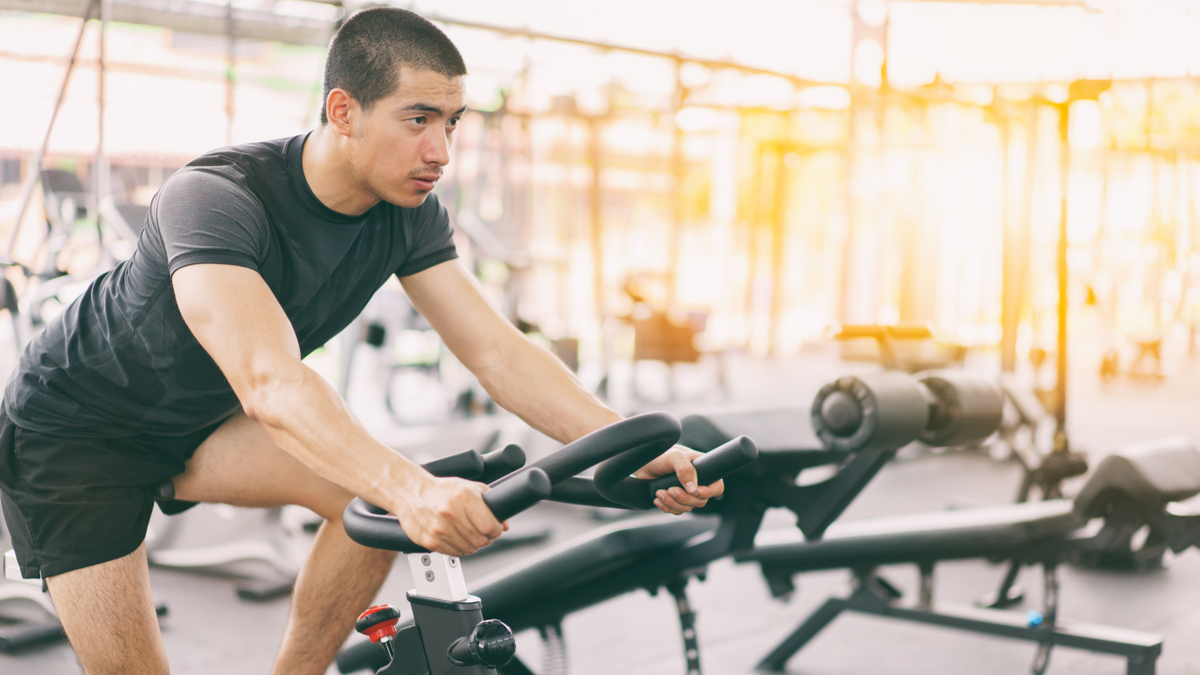
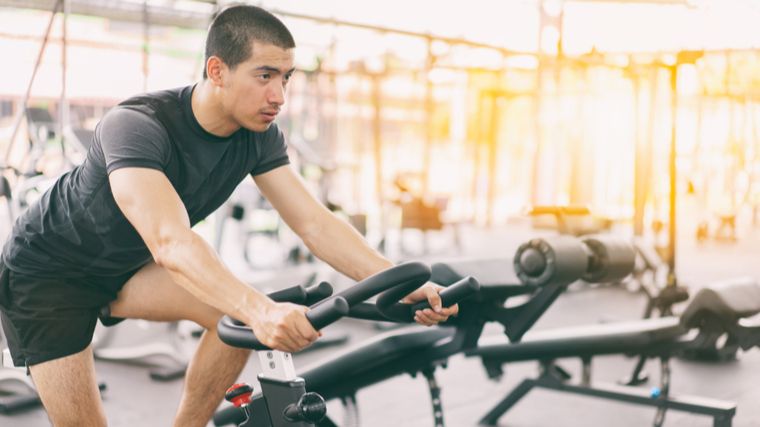
You know what you’re going to get with a standard treadmill, elliptical, or exercise bike. Aside from settings that you should safely familiarize yourself with before attempting, they have no surprises. Most gyms have an expansive selection of cardio equipment for you to experiment with during or after your workout.
Gym Culture
The gym can be an intimidating place for a newcomer. While you’re learning the ropes, it is completely fine to stumble along the way and make a few gaffes. The biggest thing to remember about gym culture is that everyone was once a beginner themselves.
So if you find yourself wondering what some of the common gym jargon means or don’t know all the rules of proper weight room etiquette, don’t worry. Being polite, courteous, focusing on your own training, and cleaning up after yourself will have you on the right track from day one.
The Big Picture
The health benefits of exercise are beyond numerous, but physical training is its own reward. If you’re even considering starting up with a workout plan, you’re already setting yourself up for success, health, and happiness long-term.
Getting yourself in the door is half the battle, and what comes after depends on how prepared you are. Luckily, with this guide in your back pocket, you have everything you need to take charge of your physique and crush any goal you set.
Featured Image: Mr. Somkiat Boonsing / Shutterstock
link


:max_bytes(150000):strip_icc()/Health-GettyImages-2222718735-eccdfcbd45b04d8fa98ecdad691be69c.jpg "6 Signs Your Gut Health Is Out of Balance")